Alan Greenspan…
Back in the day, I heard that the 30Y vs 5Y was Alan’s favorite measure as it was more directly affected by market conditions than other measures.
Here is that chart as of today. Alan must be scratching his head, I know I am.
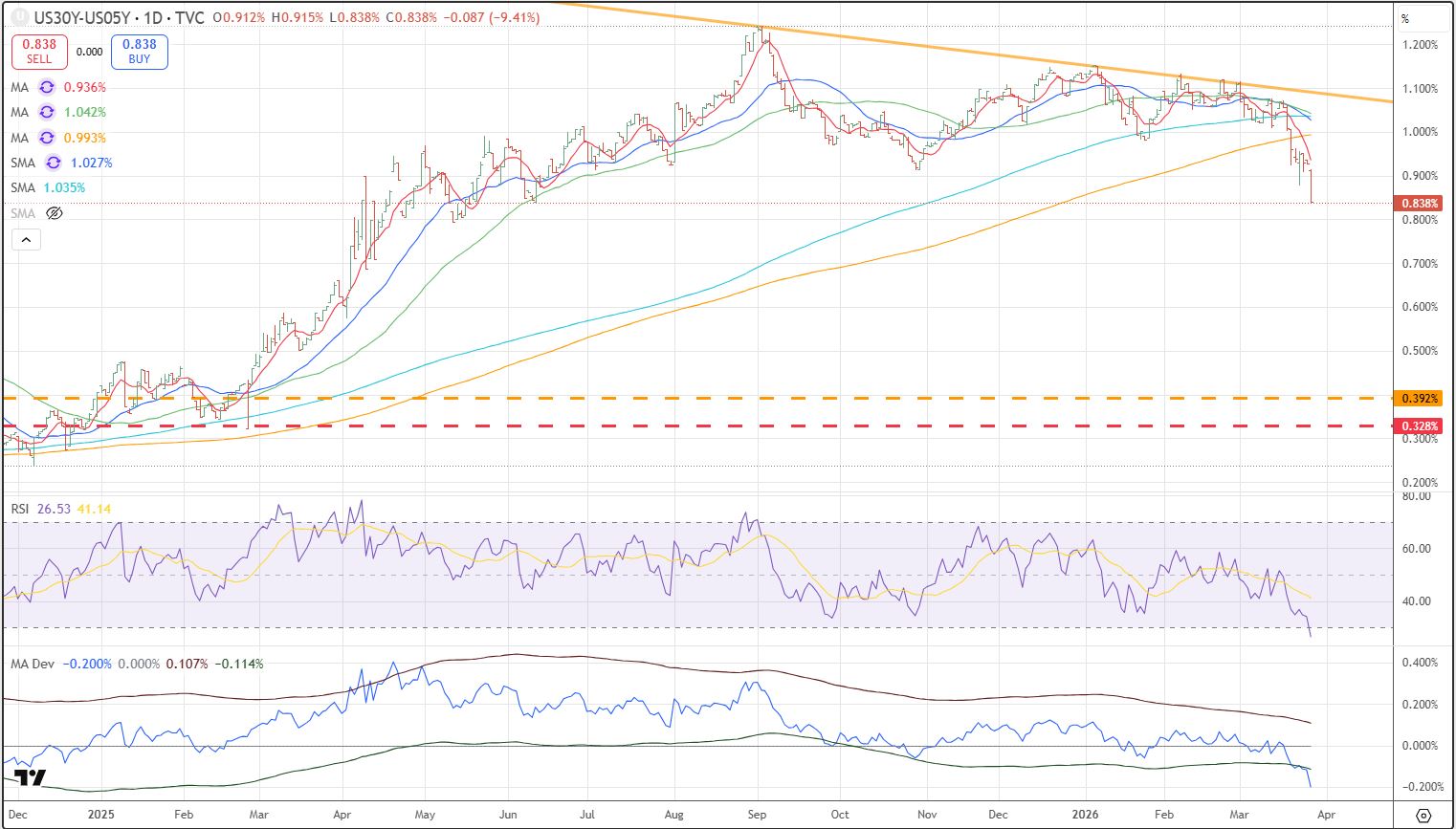
Here is what AI is saying about the measure today:
What does it mean when the 30 year interest rate is declining against the 5 Year Interest Rate?
When the 30-year interest rate is declining against the 5-year interest rate, it indicates a trend where the longer-term interest rates are decreasing compared to the shorter-term rates. This situation can have several implications for consumers and investors:
- Lower Borrowing Costs: A declining 30-year interest rate can make borrowing for longer-term loans, such as mortgages, more affordable. This can lead to lower monthly payments and potentially more savings over time. 1
- Potential for Capital Gains: As the 30-year interest rate decreases, the prices of existing bonds tend to rise. This can lead to capital gains for bondholders, especially in longer-duration bonds that are more sensitive to interest rate changes. 1
- Impact on Savings: Lower interest rates can also reduce returns on savings accounts and CDs, which are safe but offer less interest compared to the declining 30-year rate. 1
- Investment Opportunities: A declining 30-year interest rate can create opportunities for investors to buy more bonds with higher yields, potentially leading to higher returns on their investments.
- Overall, a declining 30-year interest rate against the 5-year interest rate suggests a favorable environment for borrowing, investing, and saving,
- as it aligns with the Federal Reserve’s efforts to stimulate the economy.
Leave a Reply